

 Current Families

 Inquire
 Visit
Visit Give
Give







- Our School
- Our Advantage
- Admission
- Elementary•Middle School
- High School
- Summer
- Giving
- Parent Resources
- For Educators
- Alumni
Accessing Learning Disability Services in College
October 23rd, 2025


Read more posts about Navigating the College Admissions Process for Students with Learning Disabilities.
When you make the transition from high school to college, many parts of life will change. You might move to a new city, state, or even country. Your class schedule will look different. You’ll meet new people, call your teachers “professors,” and probably manage more homework and independence than ever before.
But here’s what won’t change: you.
If you had a hard time waking up for your 8:00 a.m. classes in high school, that might still be true in college. If you loved reading before bed, that routine can continue. And if you have a learning difference, the strategies and accommodations that helped you succeed in high school will still be valuable in college.
The biggest difference? You’re now responsible for managing your own accommodations.
Understanding College Accommodations
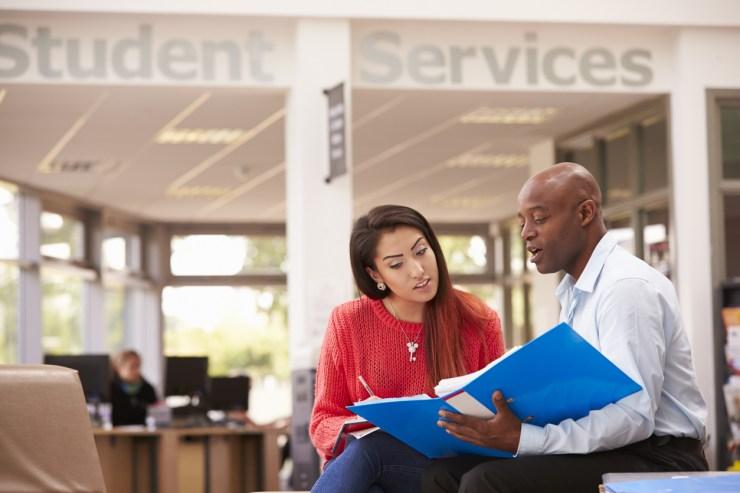
Every college has a Disability Services Office (sometimes called Accessibility Services or Student Support Services). This office helps ensure that students with documented learning disabilities can access equal learning opportunities.
Common accommodations for students with LBLD include:
Extended time on exams
A reduced-distraction environment for testing
A note taker or access to lecture notes
Permission to record lectures
Digital or audio textbooks
Executive function or academic coaching
Each college’s process may vary, but all require current documentation of your learning disability. It’s smart to prepare before classes begin so you can receive accommodations right away.
Steps to Take Before You Start College
1. Update your documentation.
Most colleges require recent testing—usually within the last three years—from a licensed professional. An IEP or 504 plan from high school can help explain your needs but may not be enough on its own. Check each college’s disability services website for specific requirements.
2. Learn the process early.
Visit the disability or accessibility services webpage for each school you’re considering. Reach out by email or phone if you have questions about documentation, timelines, or available accommodations. Some schools let you set up services as soon as you’ve been accepted.
3. Know what works for you.
You’ve already developed strategies that help you learn best—like using flashcards, highlighting key terms, or organizing notes in a specific way. Keep using them! The self-awareness you’ve built is one of your greatest strengths.
4. Build connections on campus.
When you attend orientation or accepted-student events, stop by the Disability Services Office to introduce yourself. Meeting staff early can help ease nerves and make your transition smoother. Remember—they’re there to support you.
The Bottom Line
College brings exciting changes, new challenges, and more independence. While the environment may be different, you are still the same capable learner. By preparing early, understanding your rights, and advocating for yourself, you can set yourself up for success from day one.
Posted in the category College Prep.